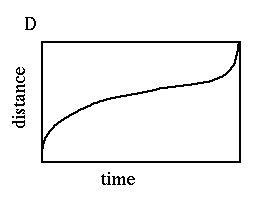
(A) (B) (C) (D)
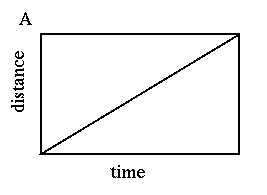
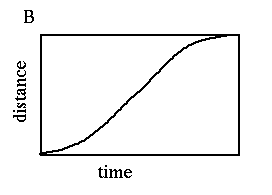
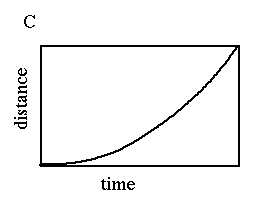
1. We wish to move a bowl of hot soup from one place to another.
Which of these graphs represents the best way to move
the soup, so that we get it there quickly without spilling any?
Of course, the soup is at rest (in the kitchen) before we start, and at rest
(on the dinner table) at the end.
(A) (B) (C) (D)
2. Which of these graphs best represents the motion of a ball
rolling down an incline?
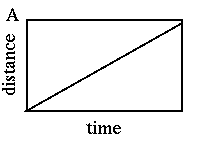

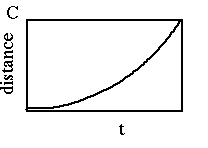

(A) (B) (C) (D)
3. An astronaut orbiting the earth goes around the earth in about 90 minutes. At all
times, he or she
(A) is accelerating towards the earth
(B) is accelerating away from the earth
(C) is accelerating in the direction he or she is going
(D) is not accelerating
4. Discussion Question:
A. Estimate a value for the acceleration of a car as it starts from
rest. Estimate a value for the acceleration as it comes to a stop.
(Better yet: have someone drive you around, and use your stopwatch
to get some data).
B. Military aircraft and space craft can accelerate very fast. It becomes important to know whether the pilot can stand accelerations of 1 g, 2 g, or 5 g (meaning, 1 or 2 or 5 times the acceleration of a freely falling object). How do these numbers compare with the accelerations we meet everyday, in elevators or in cars?
5. Discussion Question:
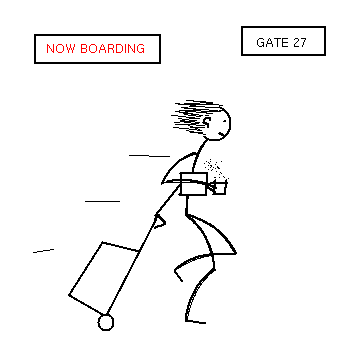
Because you have had a lot of experience carrying very full cups of coffee,
you can do it without thinking about it. But now try doing this (substituting
plain water for the coffee), while paying attention to what you do,
especially while starting and stopping and going around corners.
Also try carrying the cup with one hand, and with a telephone book clamped
under
the same arm (as if you were running through the airport with your overnight
bag, a book to read, and a cup of coffee).
Explain what you do when you carry the cup without the book to avoid spills, and why the book makes
it harder to carry the cup without spilling.