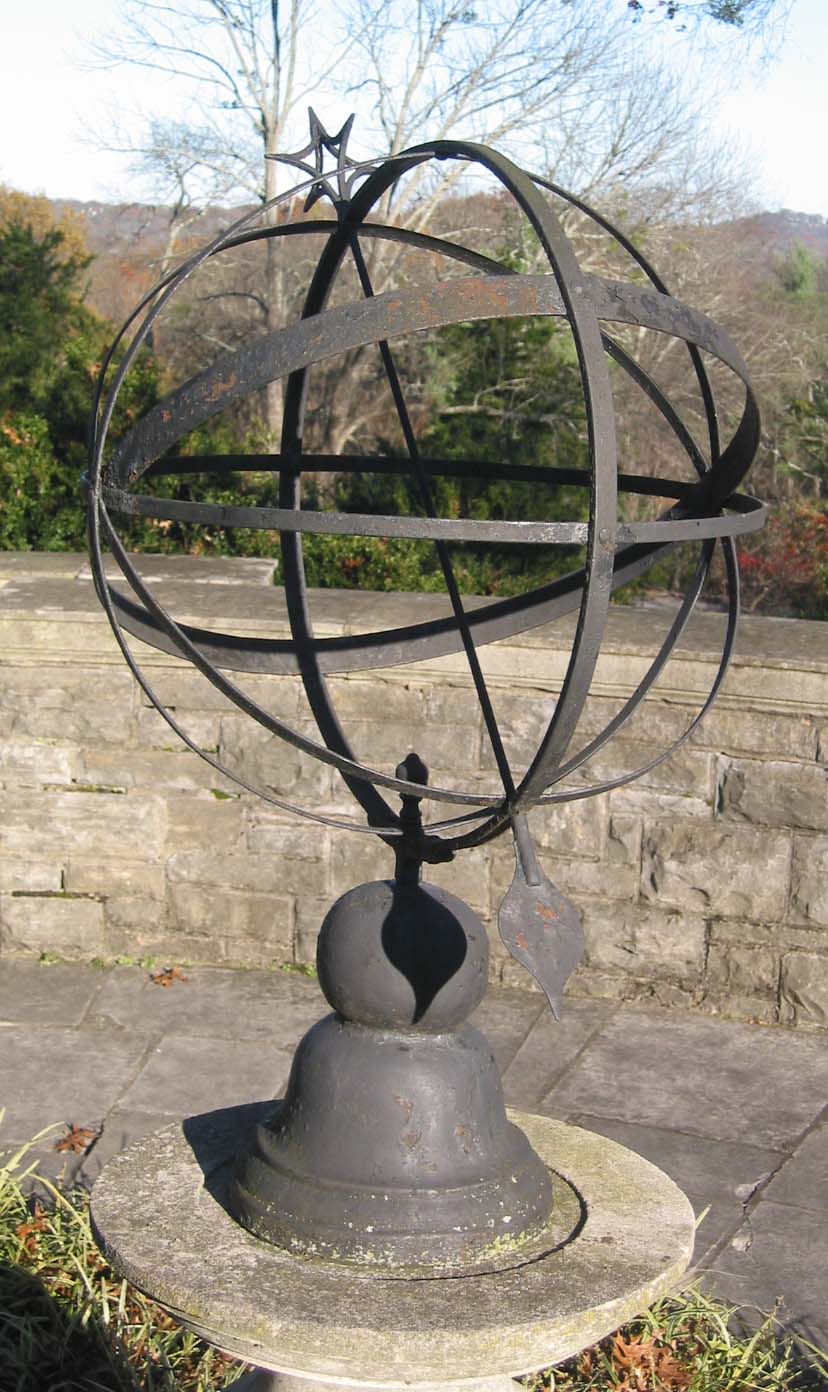
This complicated device is a
kind of sundial. It is more accurate
than the usual kind, but it still is
not very precise
We measure the passage of time in many ways, such as, "in a year," "in the blink of an eye," "until the moon is full," "after school," "in exactly 10 seconds," "until the sensor beeps," "when the tide is high," or "until my favorite program is over." The method we choose usually makes sense in context. Sometimes the measurement doesn't have to be accurate (on the can it says the paint will dry in 48 hours, but they mean in two days), but if we're baking a cake, a few minutes' difference is critical to how the cake turns out. So how we measure time and how carefully we come to that measurement depend on the tools available and on the many things that can affect that measurement.
We use the words "fast" and "slow" to describe the passage of time, telling subjectively whether it seems like a long time or only a little time. We use the same words to describe an object's motion-that is, its speed. While speed and the passage of time are two different things, we use the same words to describe them. It is crucial, however, to distinguish time from speed when we look closely at the science of moving things.
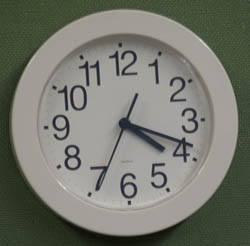
This clock reports the time to the nearest second: that is its precision.
Its accuracy depends on whether it has been set lately.
The unit on timing
 This clock reports the time to the nearest second: that is its precision.
Its accuracy depends on whether it has been set lately.
This clock reports the time to the nearest second: that is its precision.
Its accuracy depends on whether it has been set lately.